Enterprise UX Audit
Turning engineer frustration into a clear path forward — a UX audit for a mission-critical internal platform at a global technology company.
Timeline
November 2023 – January 2024
Role
UX Researcher + Designer — Independent Contractor
Industry
Enterprise / Data Infrastructure
services
THE CONTEXT
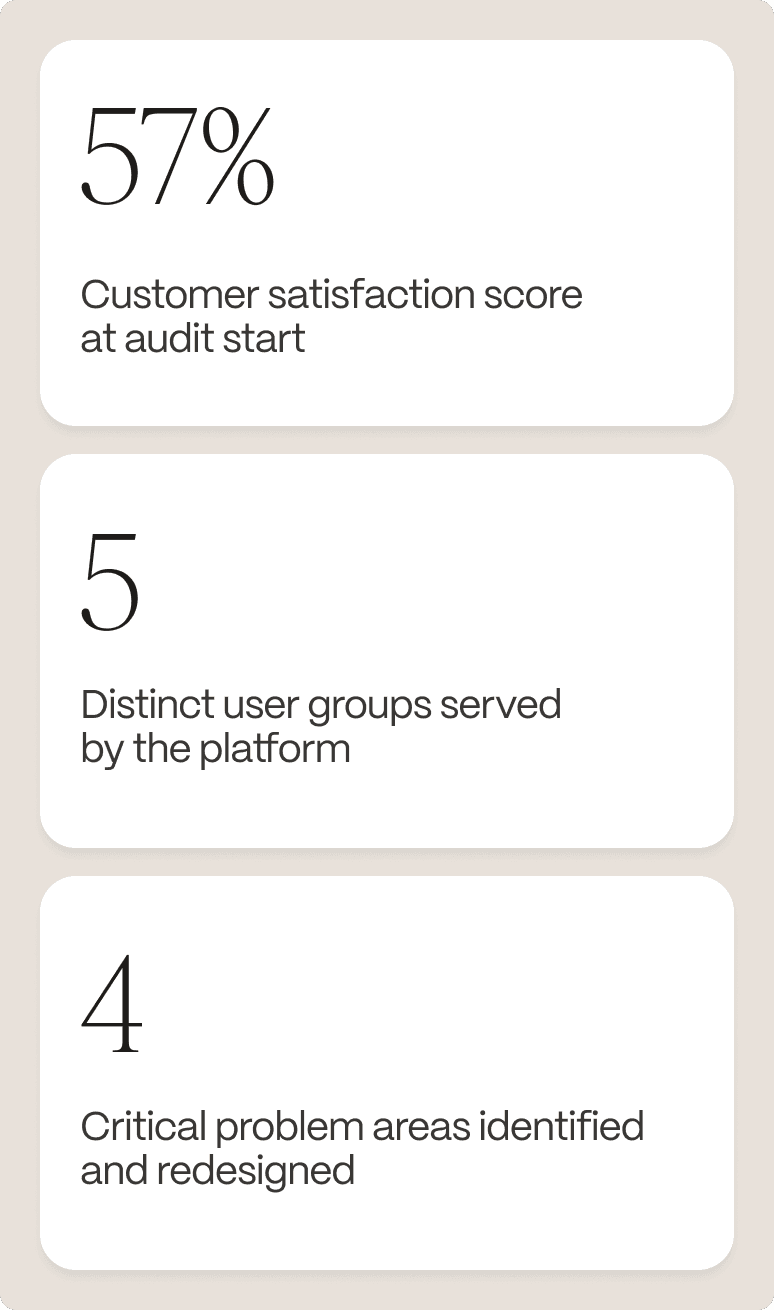
A leading global technology company relied on an internal workflow orchestration platform as the backbone of its data operations—a one-stop visual interface allowing engineers, operations teams, data analysts, applied data scientists, and product managers to author, monitor, and manage data pipelines at scale. However, despite its importance, the platform faced user challenges.
Platform satisfaction was just 57%, with widespread user dissatisfaction. I was engaged as an independent UX contractor to identify the root causes and propose actionable solutions for the engineering team.

THE CHALLENGE
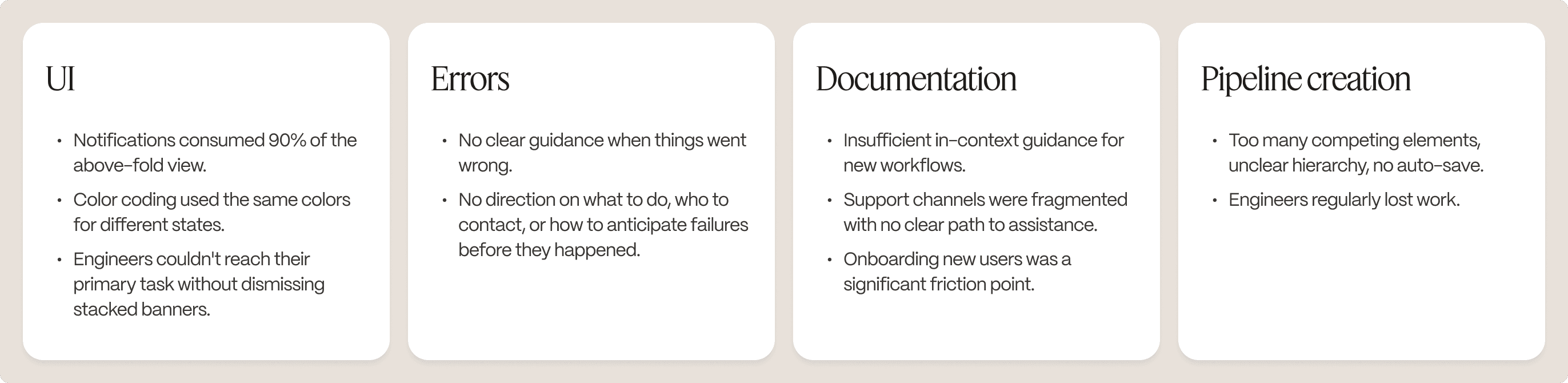
To uncover key pain points, the audit synthesized insights from user surveys, Slack help forum tickets, and in-depth interviews. Four major problem areas emerged:
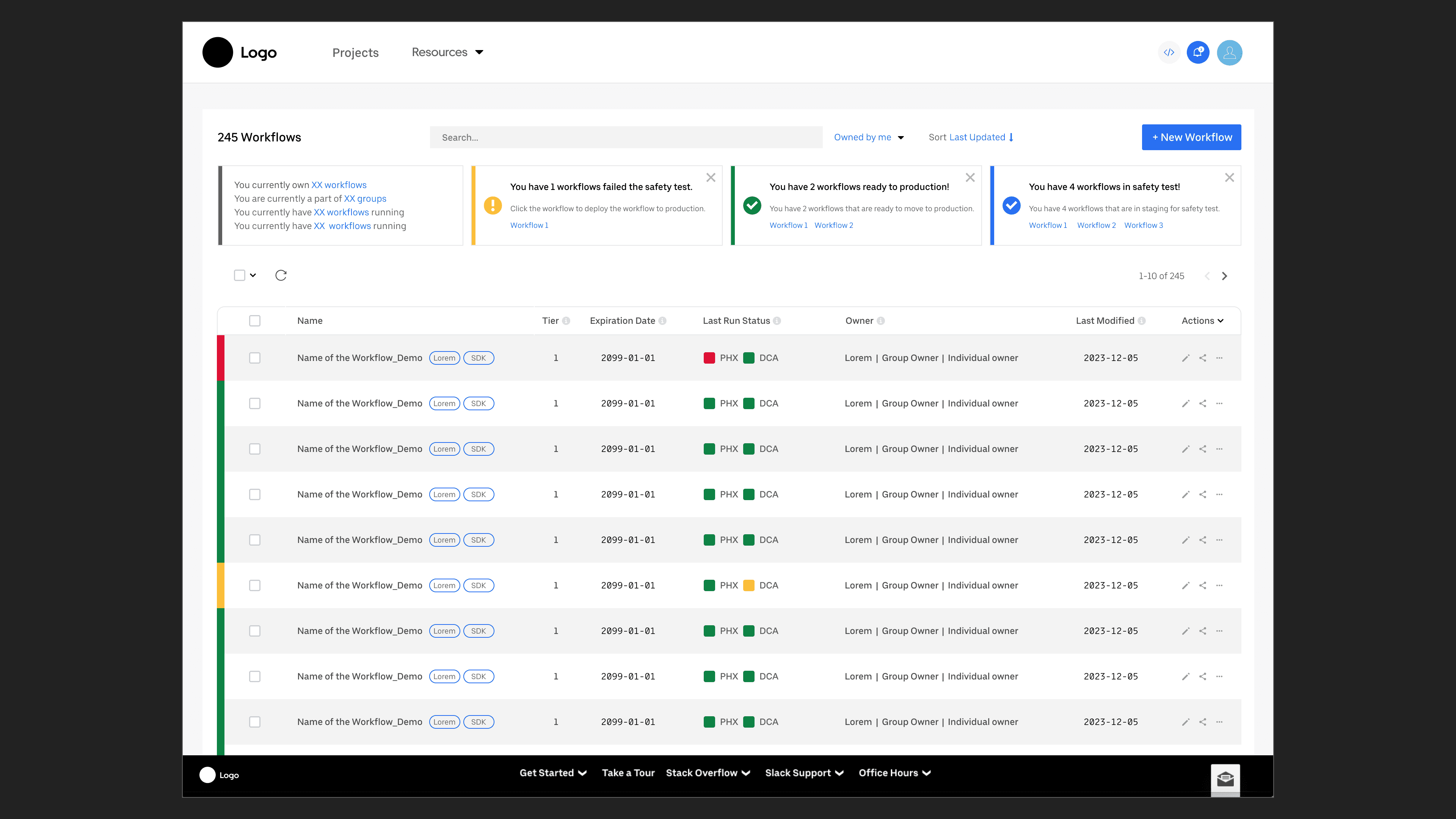
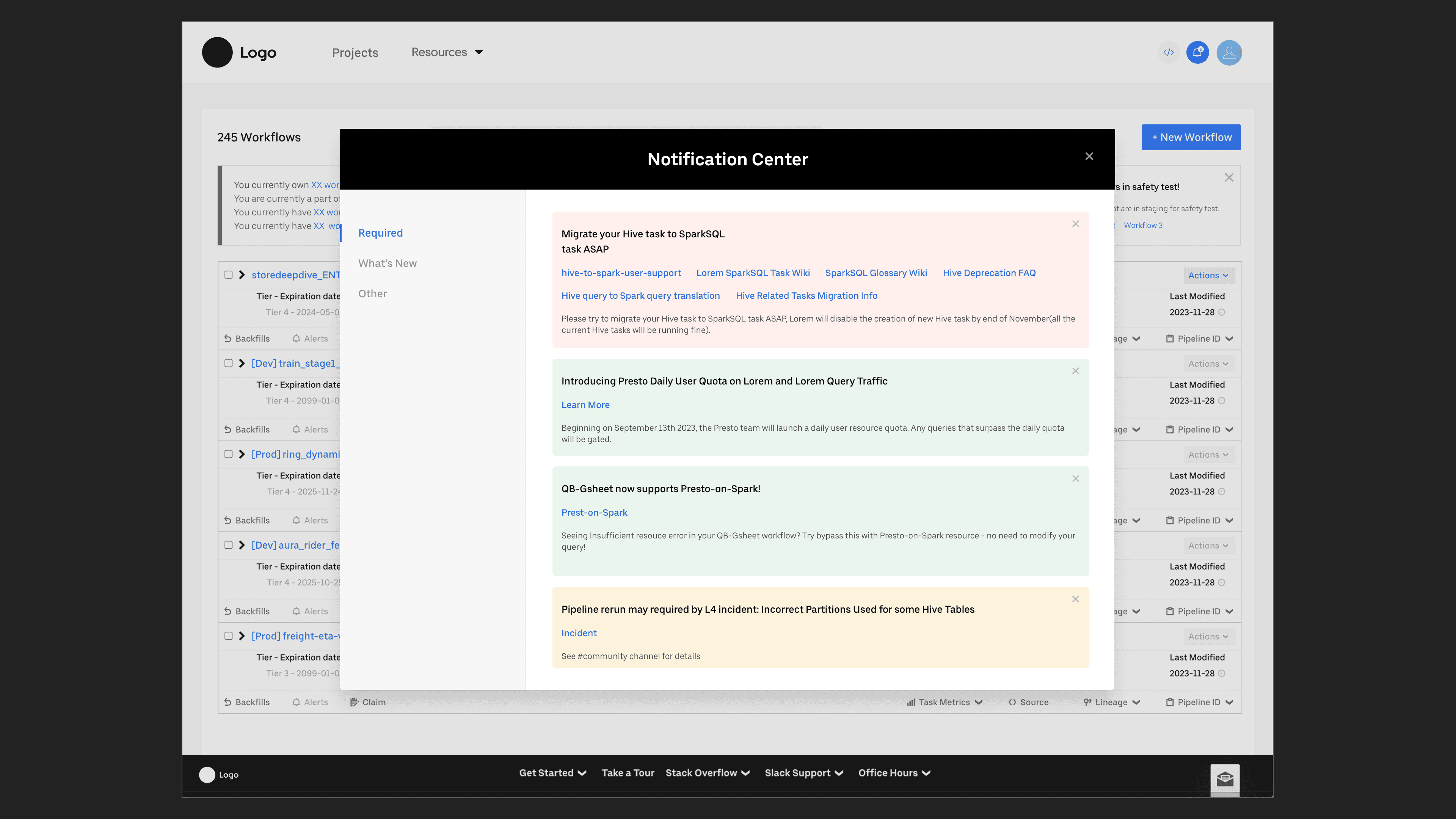
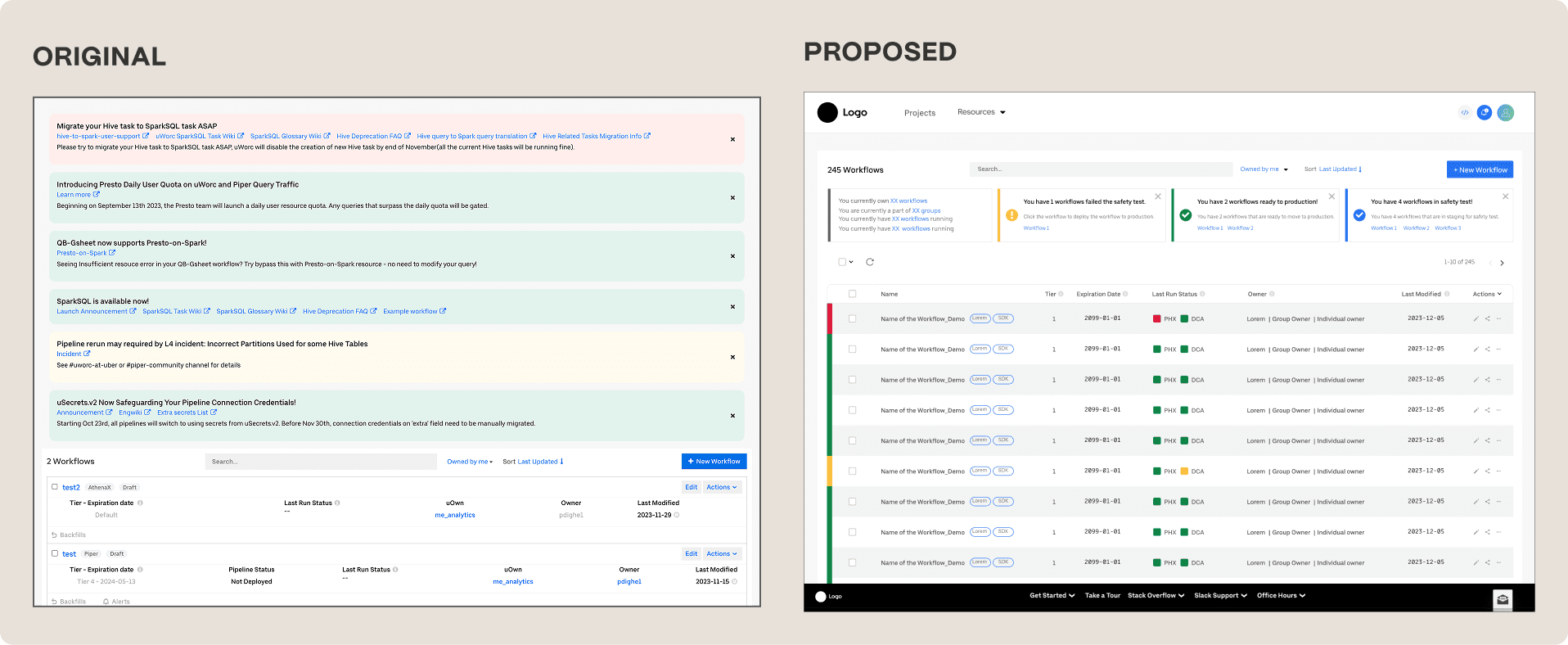
UI — The interface was cluttered and sluggish. Notifications took up nearly 90% of the dashboard's above-the-fold space, preventing users from quickly accessing their primary tasks. Color coding was inconsistent, with identical colors used to represent different states throughout the interface.
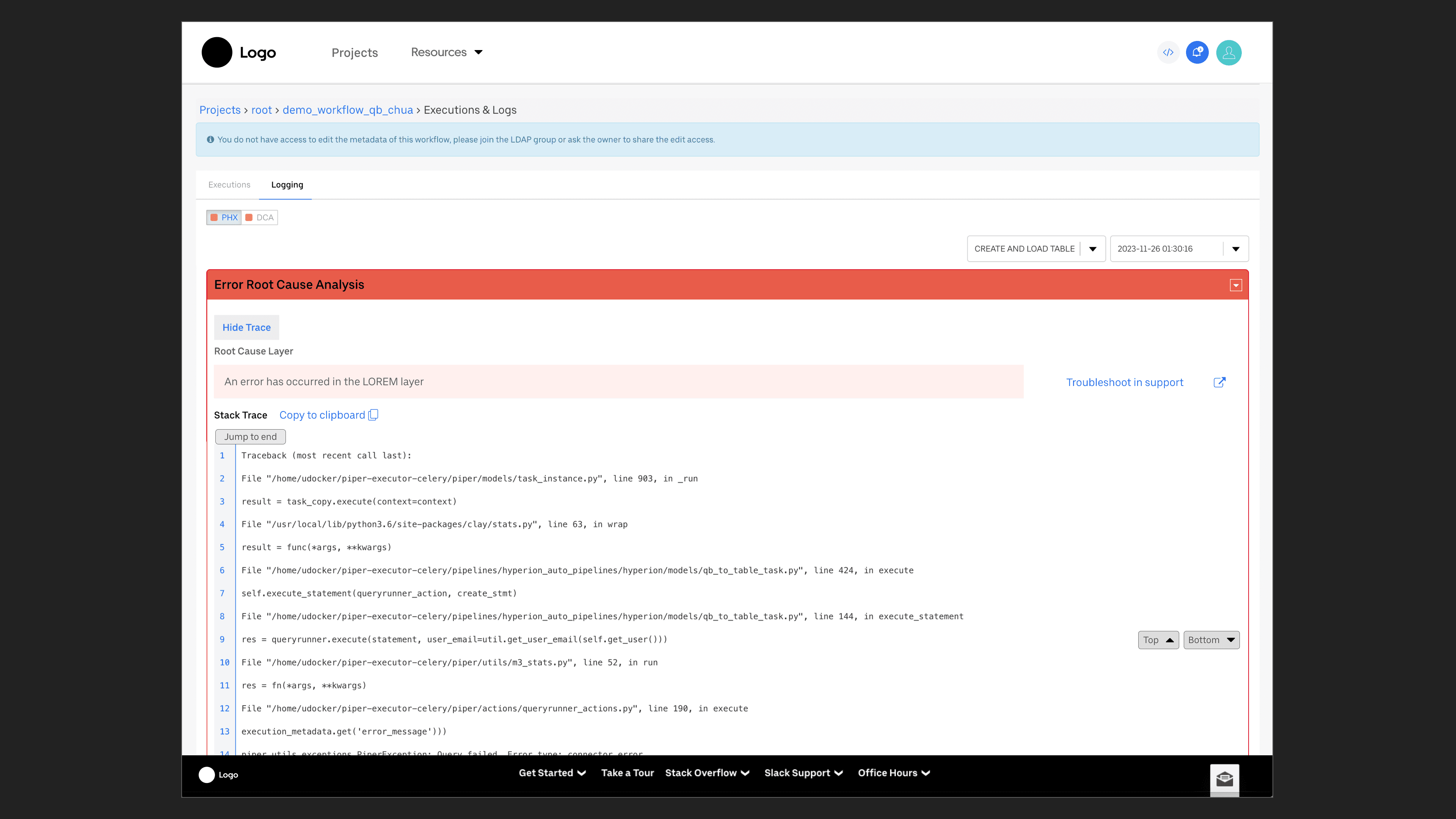
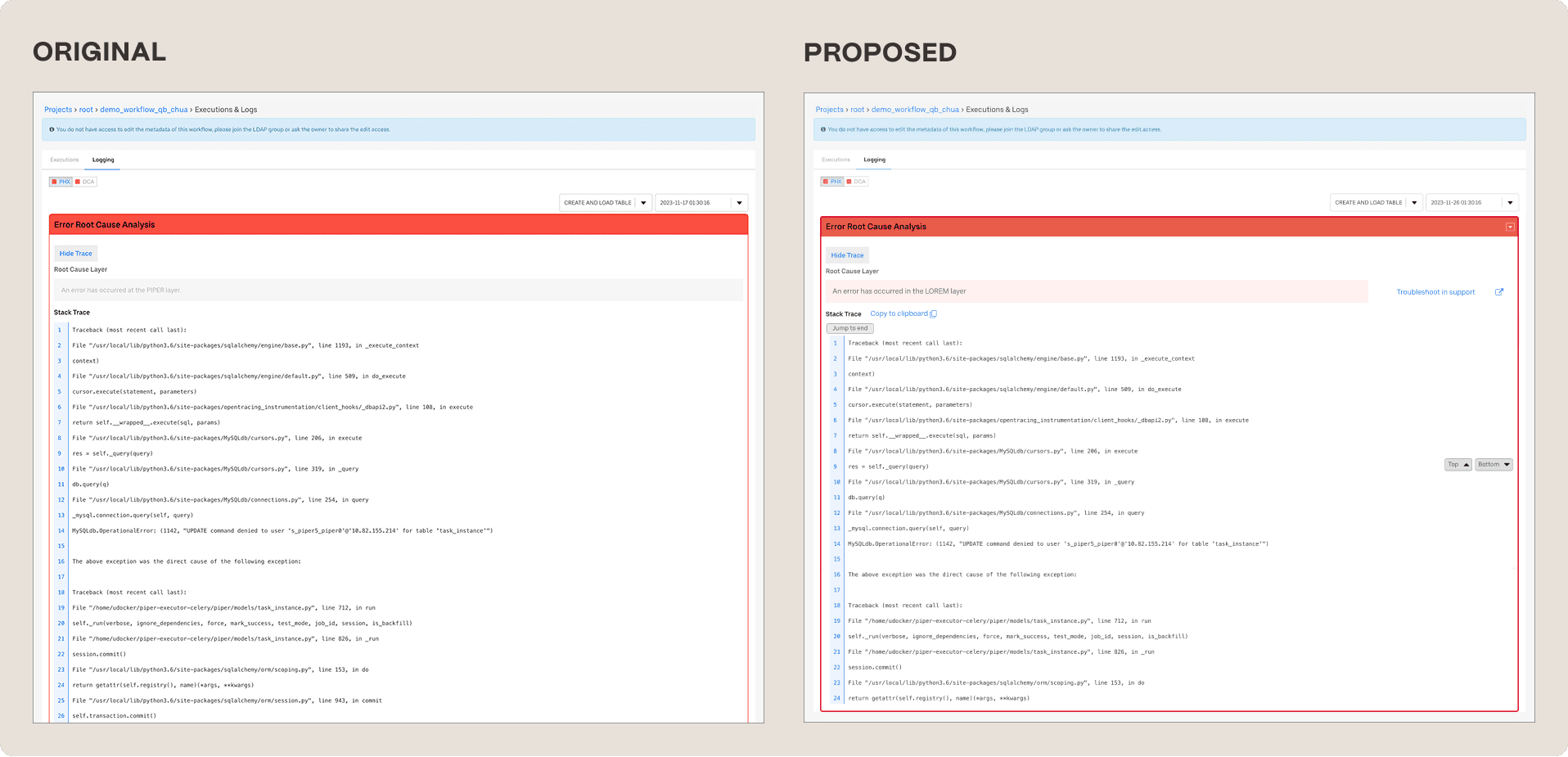
Errors — Users received little guidance when issues arose. Error locations were unclear, next steps and points of contact were missing, and users were unable to anticipate or prevent errors within their pipelines.
Documentation — In-context guidance for new workflows was insufficient. Support channels were fragmented, and users struggled to find help or onboard effectively, creating unnecessary friction for newcomers.
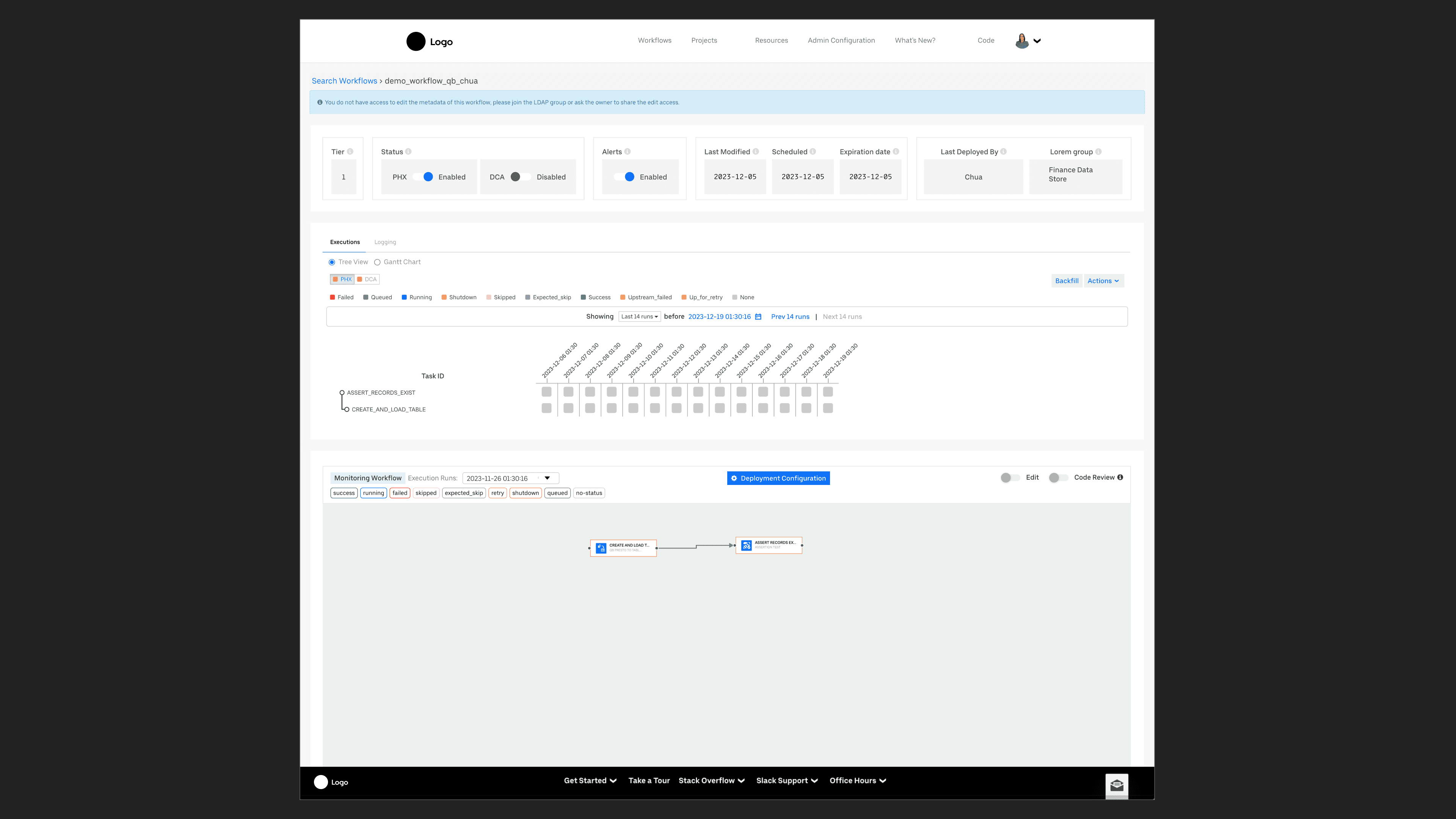
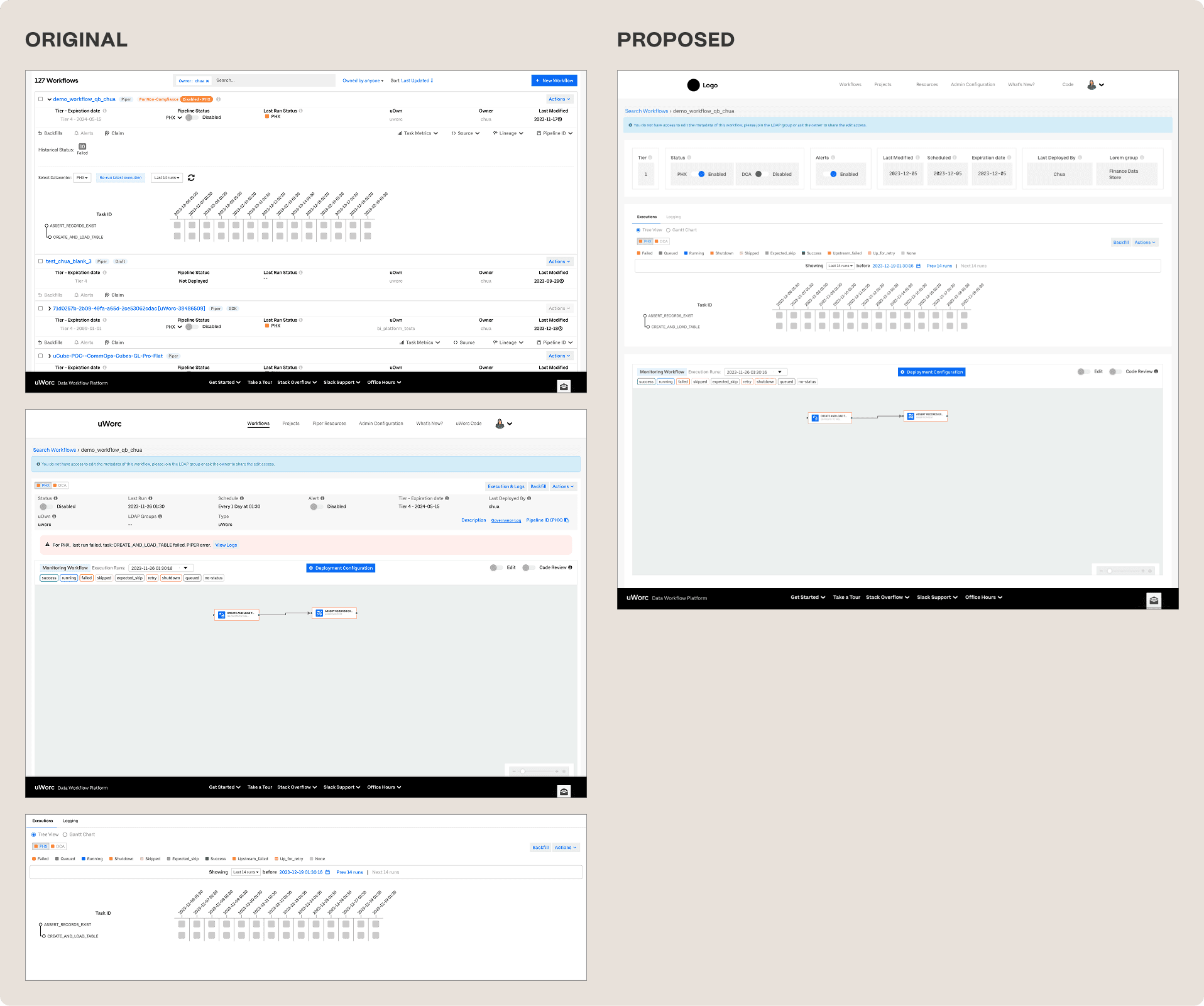
Pipeline Creation — The pipeline view was overloaded with competing elements. Poor information hierarchy and the lack of auto-save led to confusion and frequent loss of work for engineers.

THE PROCESS
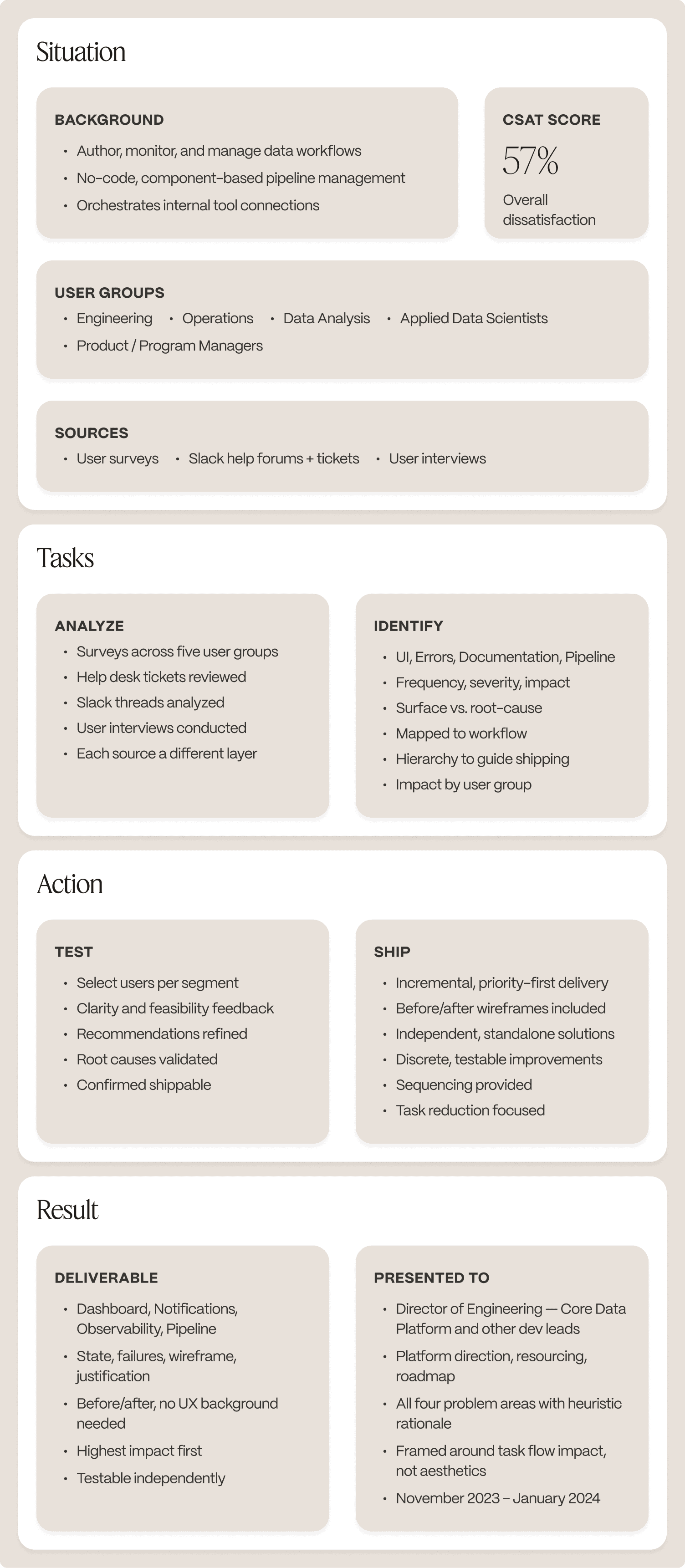
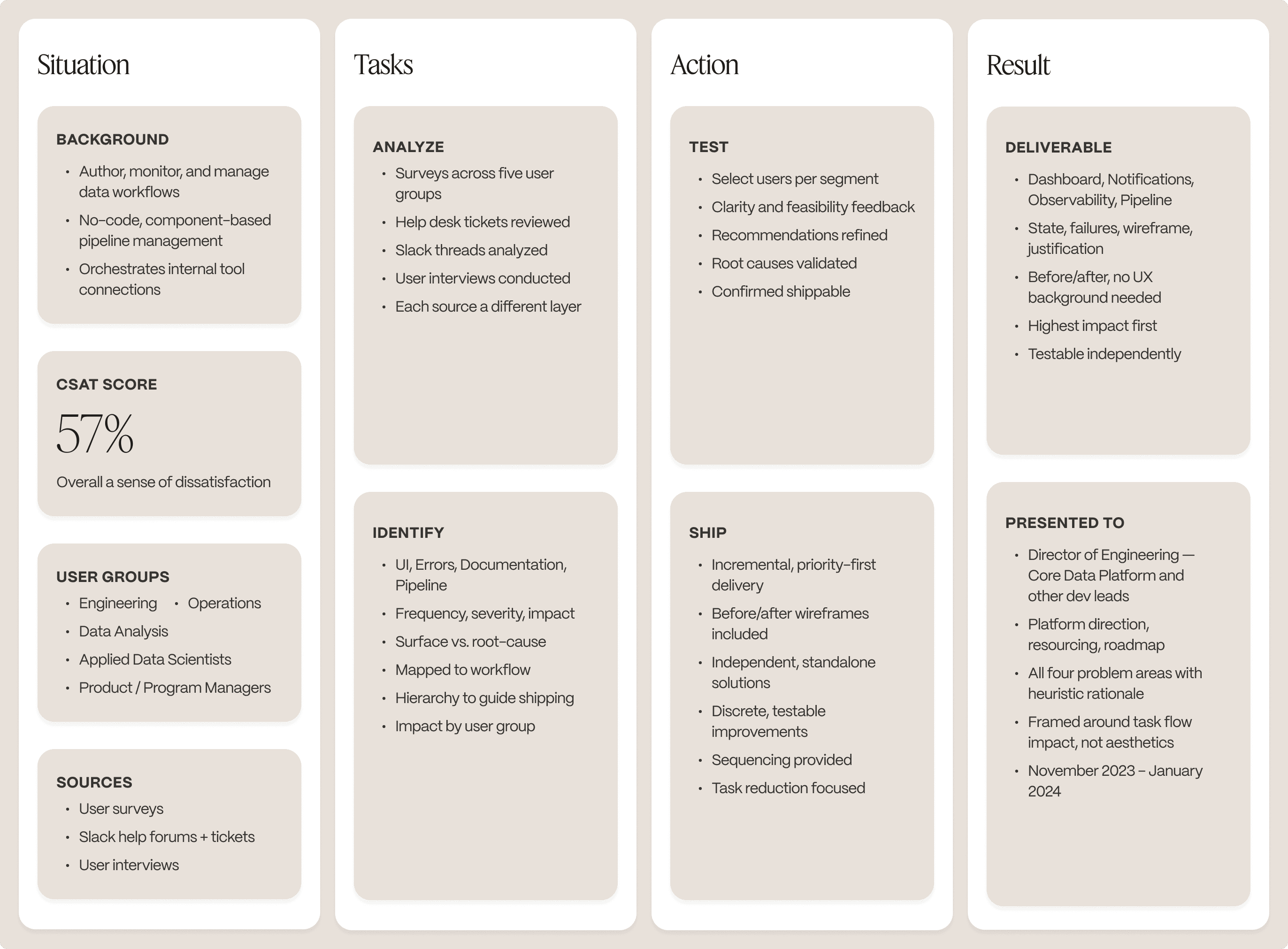
The audit followed a rigorous Situation → Task → Action → Result framework—beginning with a concrete diagnosis, progressing through targeted tasks, and culminating in actionable solutions designed for incremental rollout. Instead of relying on a single source, the analysis synthesized insights from customer surveys, Slack support tickets, and direct interviews with five user groups: Engineering, Operations, Data Analysis, Applied Data Science, and Product/Program Management.
Each input exposed a unique layer of friction: surveys highlighted visible pain points, tickets pinpointed blockers, and interviews surfaced the issues users had silently endured. This holistic approach revealed precisely where the platform was letting down its most critical users.
Analyze — Synthesized customer surveys, help desk tickets, Slack forum threads, and user interviews across five distinct user groups to identify recurring pain points.
Identify — Categorized and prioritized key problem areas by frequency, severity, and impact on core user tasks.
Develop — Designed simple, translatable, and testable solutions — proposals that engineering teams could evaluate, scope, and ship incrementally.
Test — Validated proposed solutions with smaller key user groups before finalizing recommendations.
Ship — Structured solutions for incremental delivery, addressing the highest-priority issues first without requiring a full redesign commitment.
THE SOLUTION
Dashboard — Replaced the notification-dominated view with a consolidated workflow health summary. Users get an at-a-glance status overview — total workflows, failures, safety test results — without having to dismiss stacked alert banners before reaching their actual work.
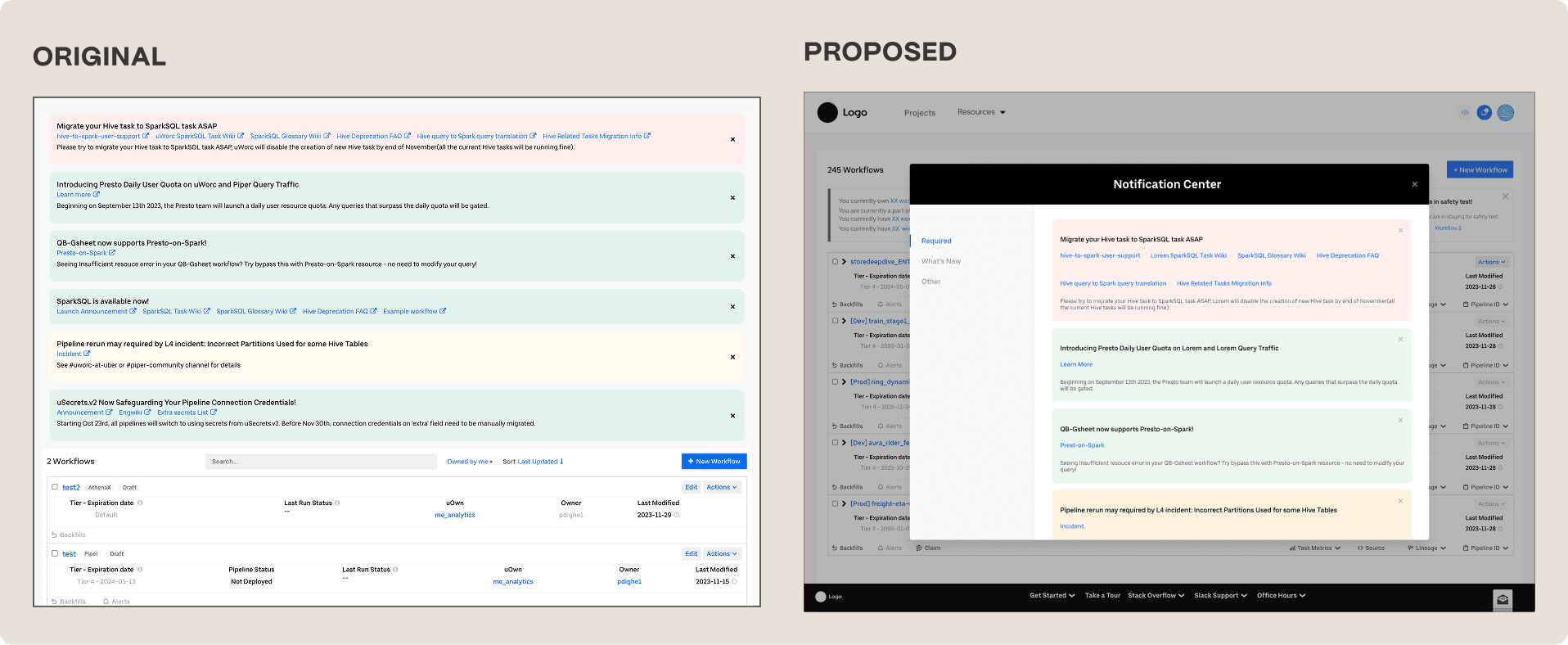
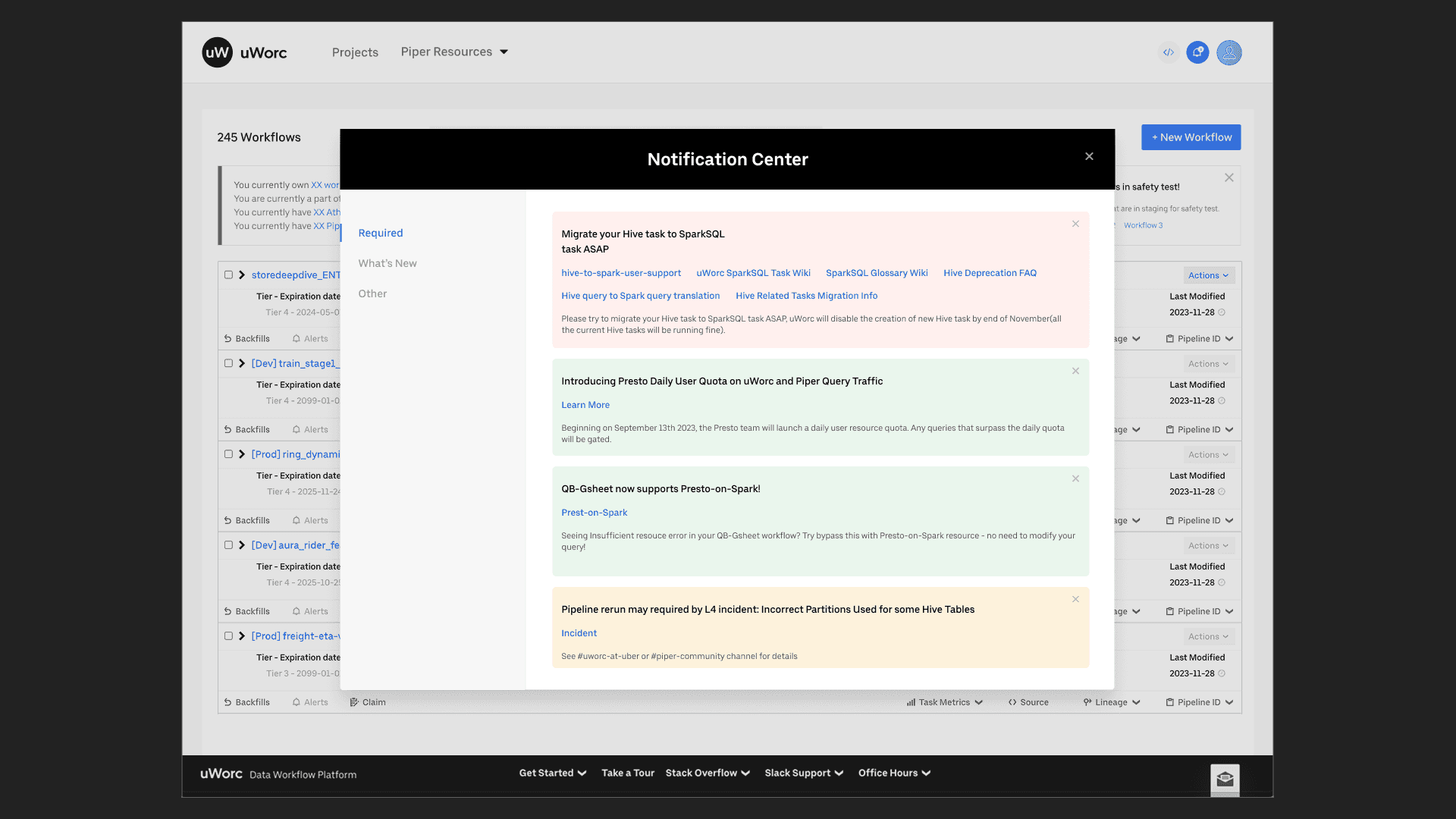
Notification Center — Consolidated all alerts, system updates, and announcements into a single modal notification center accessible from the top navigation. Content organized into tabbed categories (Required / What's New / Other) — one place, one interaction, persistent dismissal.
Observability — Redesigned the error state to open on load with the root cause layer clearly highlighted, color-coded severity, a direct troubleshooting CTA, and copy-to-clipboard functionality on the stack trace. Users go from encountering an error to knowing their next step in seconds, not minutes.
Pipeline View — Restructured into a clear three-level hierarchy: quick data points at the top, execution timeline in the middle, pipeline steps below. The information users need most is immediately visible without navigating to a separate page.
THE OUTCOME
The audit’s findings and actionable solutions were presented directly to the Director of Engineering overseeing platform strategy and resource allocation. The presentation addressed all four key problem areas with before-and-after wireframes, heuristic justifications, and a prioritized roadmap for incremental implementation—providing the engineering team with a concrete plan to move from 57% satisfaction to a platform users can truly trust.
LEARNINGS
A CSAT score is a starting point, not an answer. The 57% confirmed dissatisfaction existed — but the real work was understanding why. The most valuable phase was synthesizing qualitative data: the specific language users used in Slack forums and support tickets pointed directly to the highest-friction moments faster than any survey metric.
Enterprise internal tools require a different audit lens. Users had learned to work around the friction — which meant the most damaging problems weren't always the most visible ones. Separating "what users complained about" from "what was actually costing them the most time" required looking at task flows, not just pain points.
Presenting to an engineering director requires a different kind of rigour. Every proposal needed justification beyond "this feels better." The most effective framing was always: this reduces the number of interactions required to complete the task — and here's the before/after to prove it.